
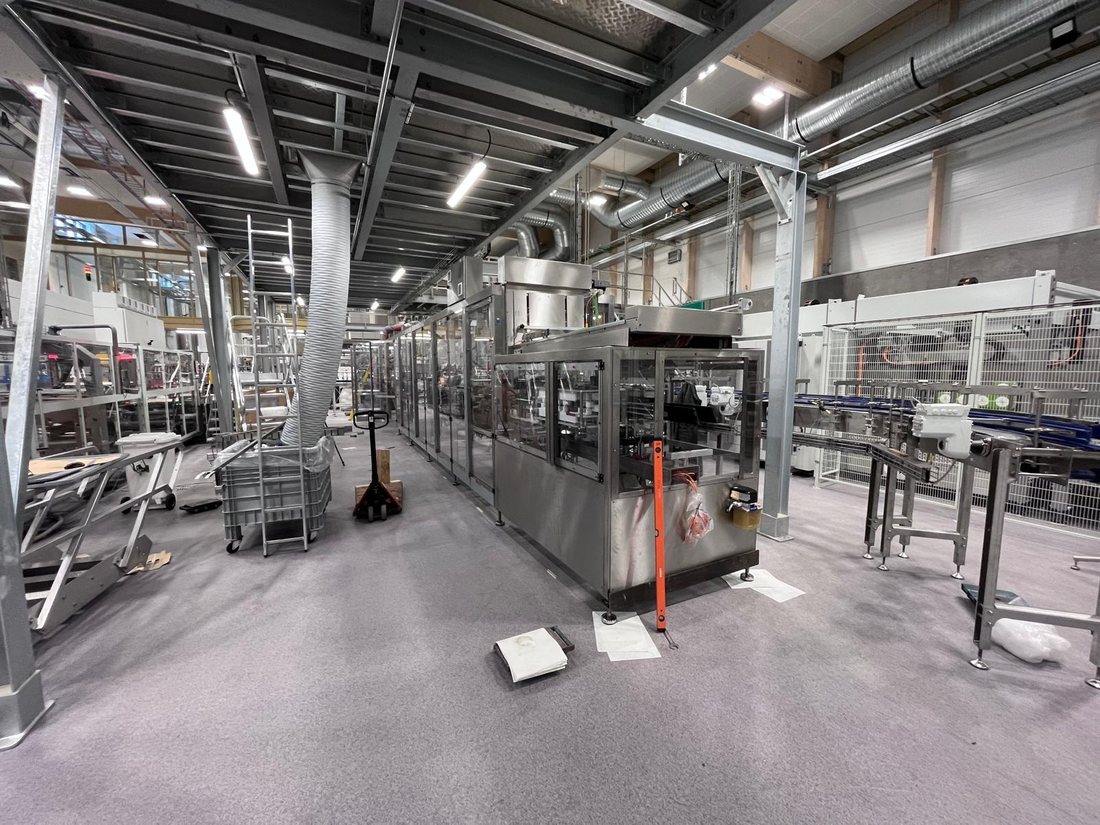
Assembly of industrial machines and production lines
KEMEX INTERNATIONAL delivers complete assembly of machines and industrial lines – from project preparation and unloading, through internal transport and precise positioning, to final assembly and preparing the unit for start-up.
-
01
Project preparation
We work out every detail and plan every step.

-
02
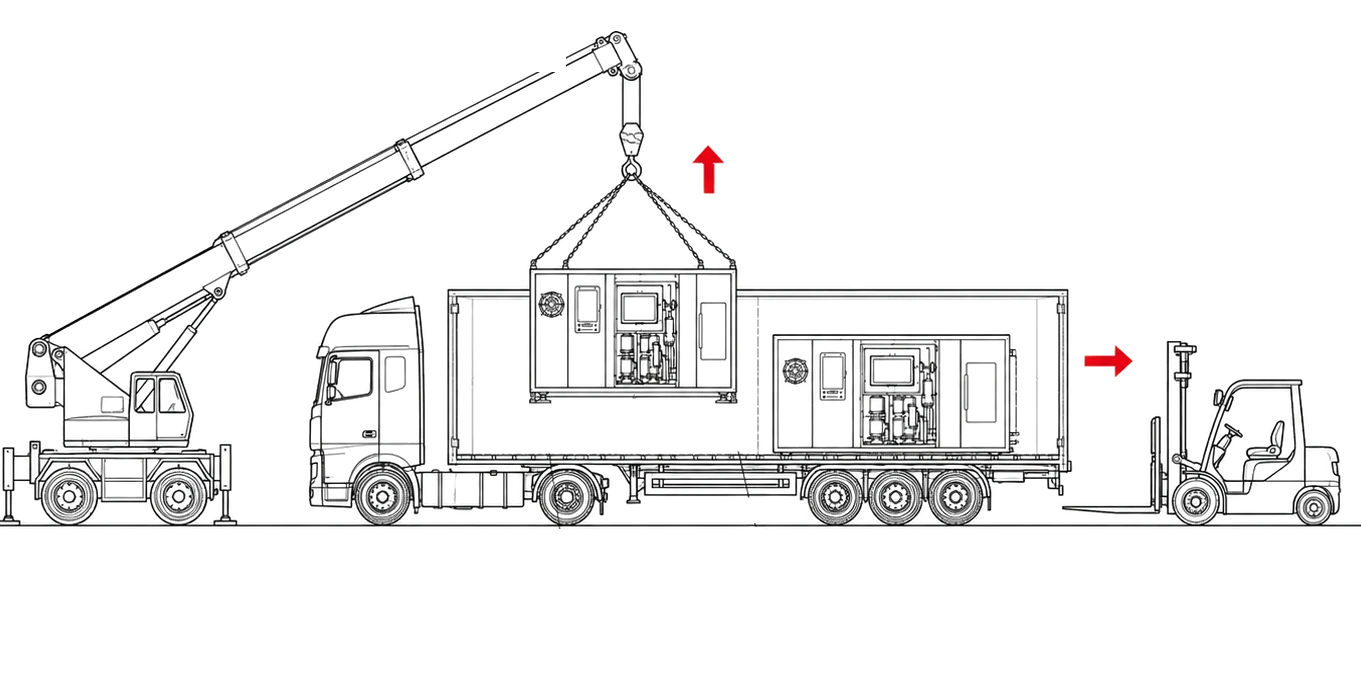
Machine unloading
Safe removal of the unit from the trailer and preparation for further transport in the hall.
- weight and lifting points
- access for a crane or truck-mounted crane
- securing the unit for internal transport
-
03
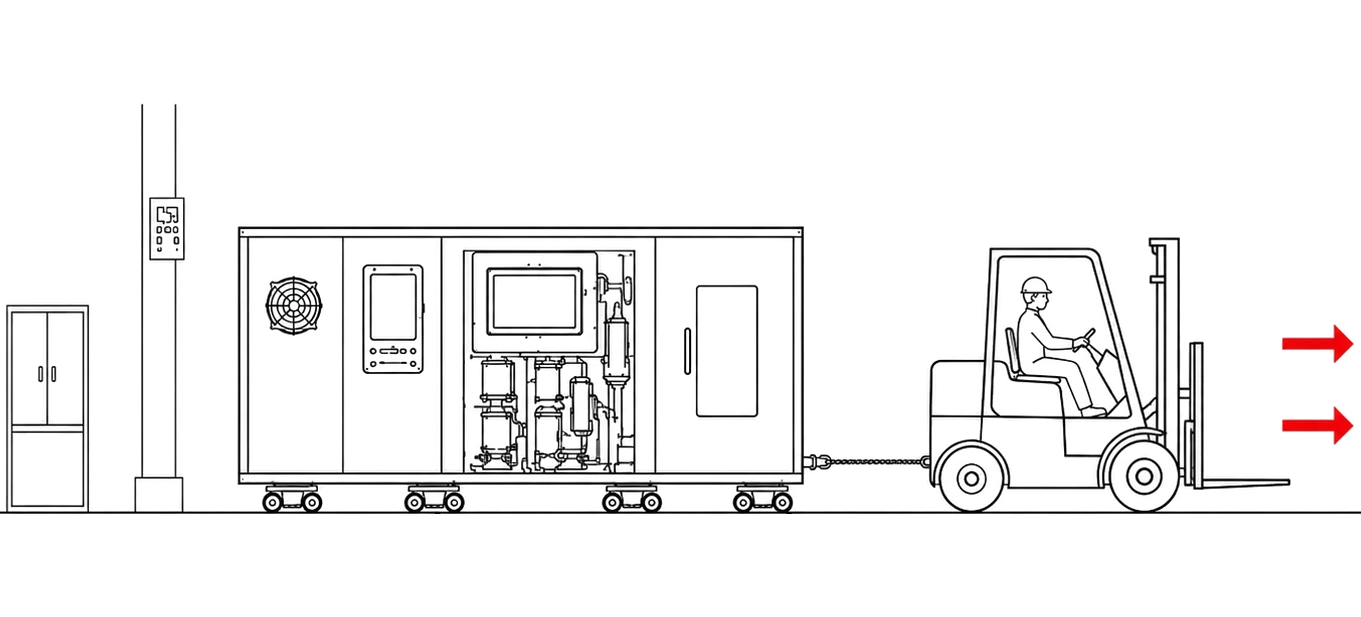
Machine transport
Moving the unit on rollers and preparing it for positioning.
- transport on rollers and aids
- manoeuvring in tight spaces
- preparing for placement at the destination
-
04
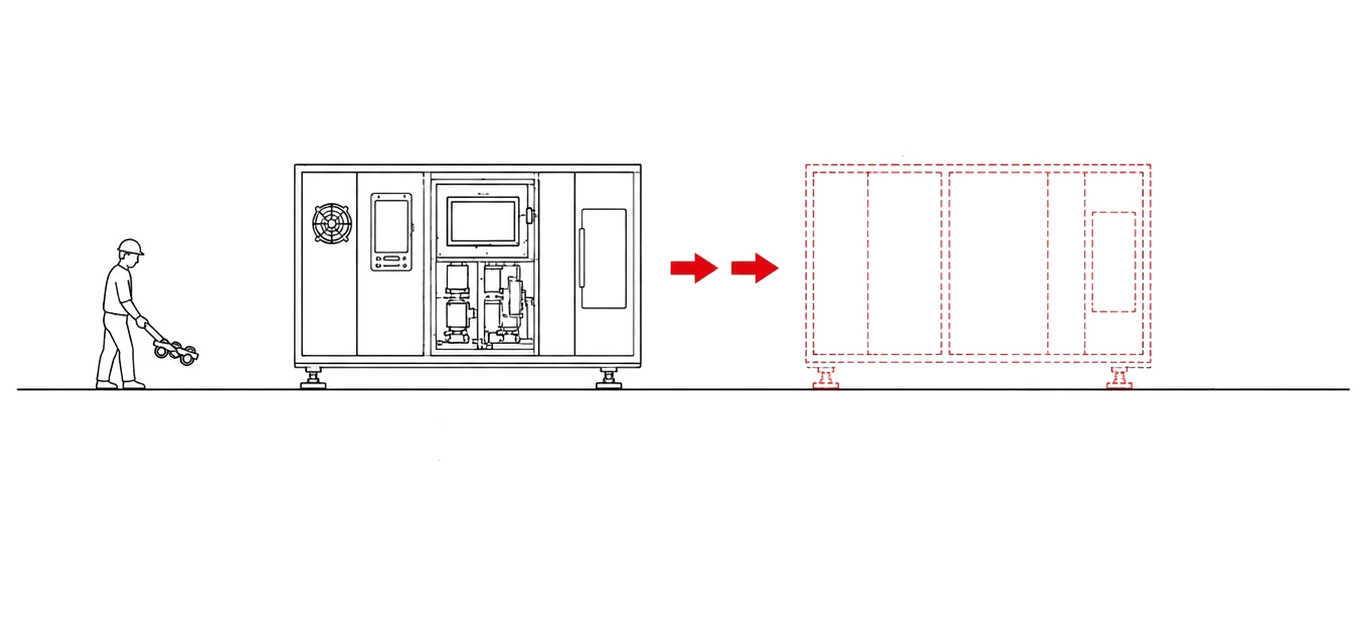
Machine positioning
Precise placement of the unit in line with the other sections.
- positioning the unit
- aligning with the other sections
- preparing the spot for further work
-
05
Machine assembly
Joining sections, connections and preparing the unit for start-up.
- joining and connecting sections
- assembly and installation work
- preparing for tests and start-up
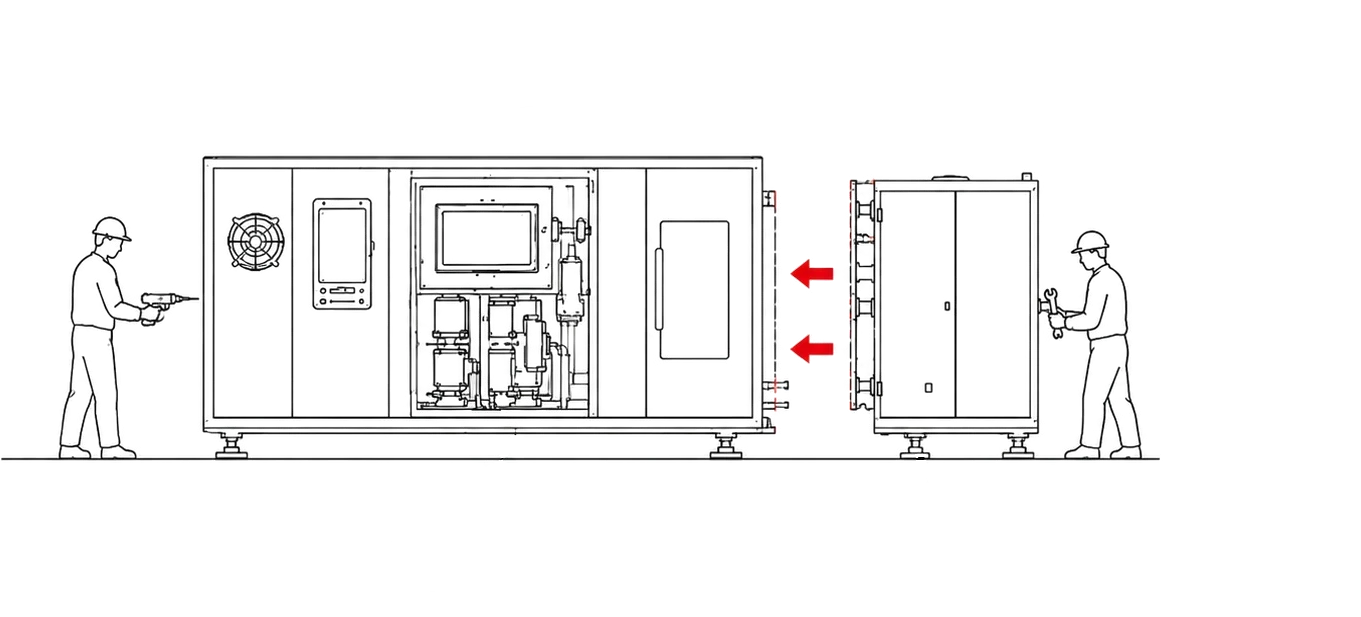
Complete machine assembly
We run the whole installation process in an orderly and safe way – from planning the work, through positioning the unit, to final assembly and preparation for further testing.
Good assembly starts with geometry
We support the positioning stage with our own calculation tool, which helps organise the layout data and determine the points needed to set the machine up in the hall.
Every positioning point follows from specific dimensions, axes and relations recorded in the technical documentation. We analyse the machine's position relative to the hall structure, the neighbouring equipment and the run of the whole line, and then set out the reference points needed to mark out the workstation. As a result, even before the actual positioning begins, we know exactly where every key element of the machine should stand.
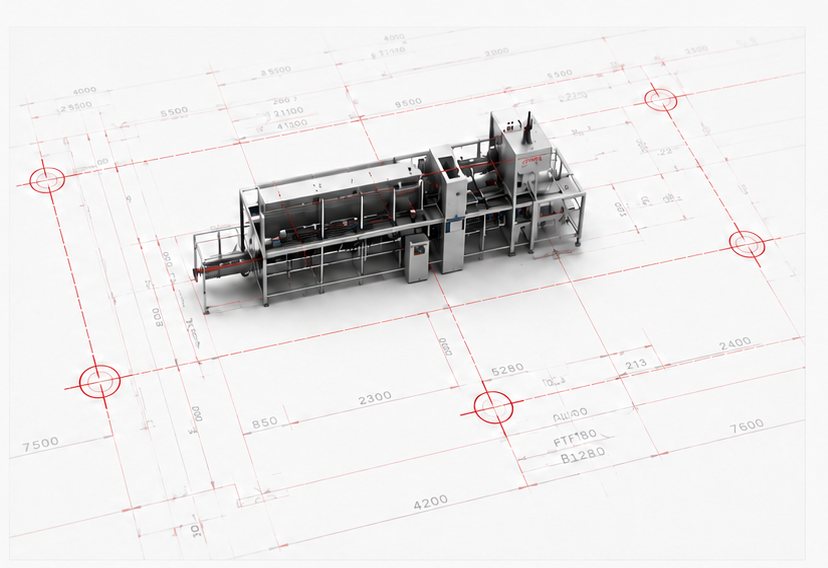
- Layout analysisWe read the technical documentation and determine the machine's position relative to the hall and the other elements of the line.
- Marking out the hallWe set out assembly points and axes directly on the floor, transferring the design from the documentation to the hall.
- Precise positioningWe position the machine against the previously set points and axes, preparing it for assembly and connection to the line.